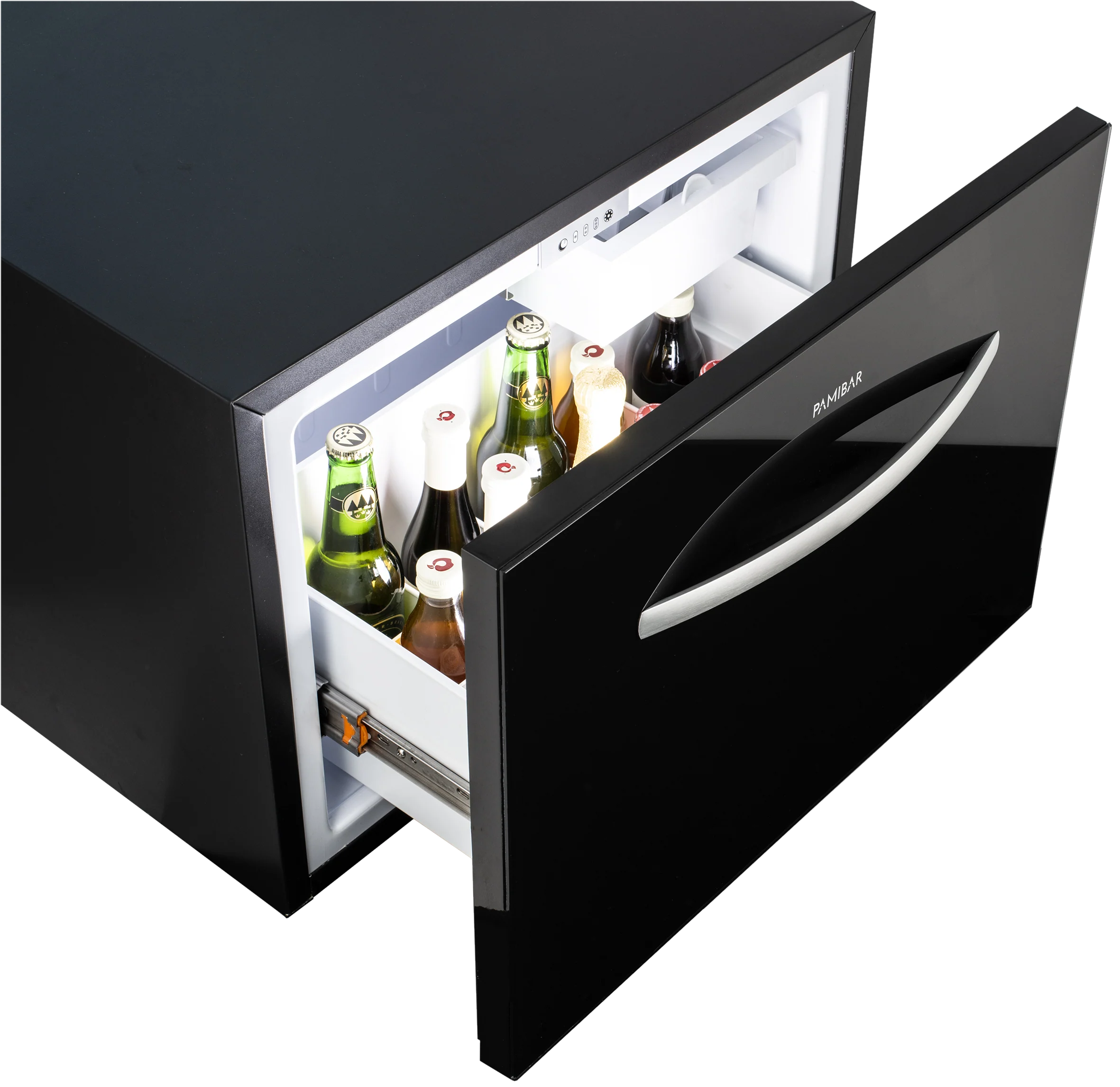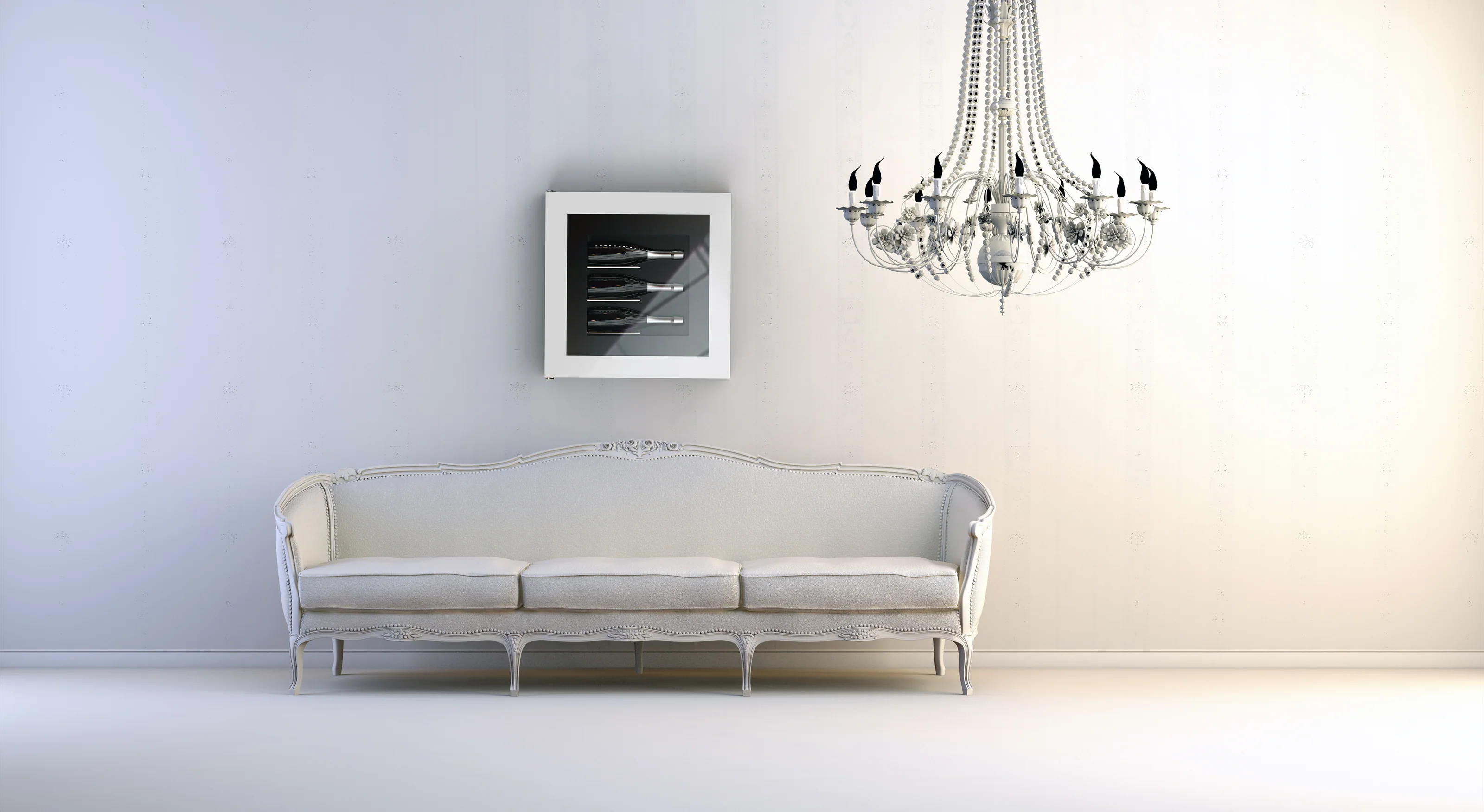
The right minibar is not the one with the longest specification sheet. It is the model that matches the room climate, service level, available space and the guest’s acoustic expectations.
Key points
- Check climate and cabinet ventilation
- Choose between 0 dB, efficiency and cooling power
- Match capacity to the real assortment
- Select solid or glass doors around the service model
A standard room, a suite and a seaside resort operate under different conditions. Check cabinet volume, ventilation, distance from the bed, ambient temperature and refill frequency before selecting a model.
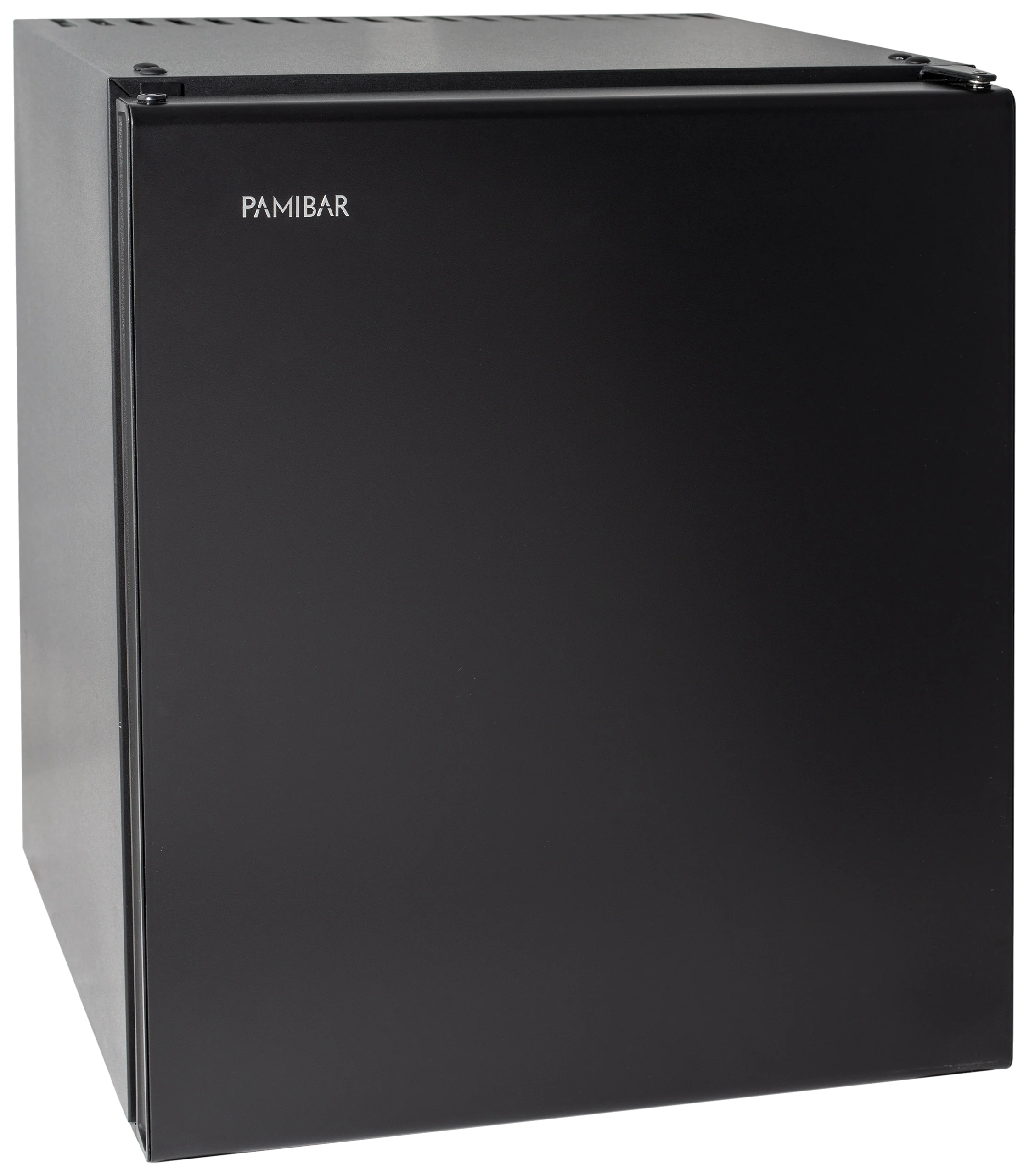
Door type also changes the service: a solid door keeps the unit discreet, while glass presents the assortment and supports beverage sales.
Absorption is the answer when absolute silence is essential: it has no moving mechanical parts and operates at 0 dB. A Peltier cell offers very quiet, efficient cooling for sustainability-led projects.
A compressor suits warm climates, attic rooms and sun-exposed spaces where rapid temperature recovery and stable performance are required.
Capacity should follow the actual assortment. Unused volume takes space and energy; an undersized minibar increases refill work and limits upselling.
A complete B2B assessment compares consumption, warranty, spare parts, built-in installation and staff access, not only the purchase price.
What is the quietest minibar for a hotel room?
An absorption minibar operates at 0 dB because it uses no moving mechanical parts.
When is a compressor minibar required?
It is recommended for warm environments, attic rooms, seaside resorts and rooms with high beverage turnover.
How many litres does a standard room need?
It depends on the assortment and refill frequency. Capacities from 25 to 40 litres cover many rooms, but furniture and service should be assessed together.